

An Australian biotech startup developing an alternative to petrochemical plastics using seaweed has raised $16 million to scale its novel extraction technology and build a demonstration plant in Perth.
Uluu, which was co-founded by oceanographer Julia Reisser and former BHP executive and lawyer Michael Kingsbury in 2021, banked the early-stage funding in a Series A led by Burda Principal Investments, the VC arm of German group Hubert Burda Media.
The funding round also includes money from Main Sequence, Novel Investments and Startmate, and a consortium of impact and family investors, including Fairground and Trinity Ventures.
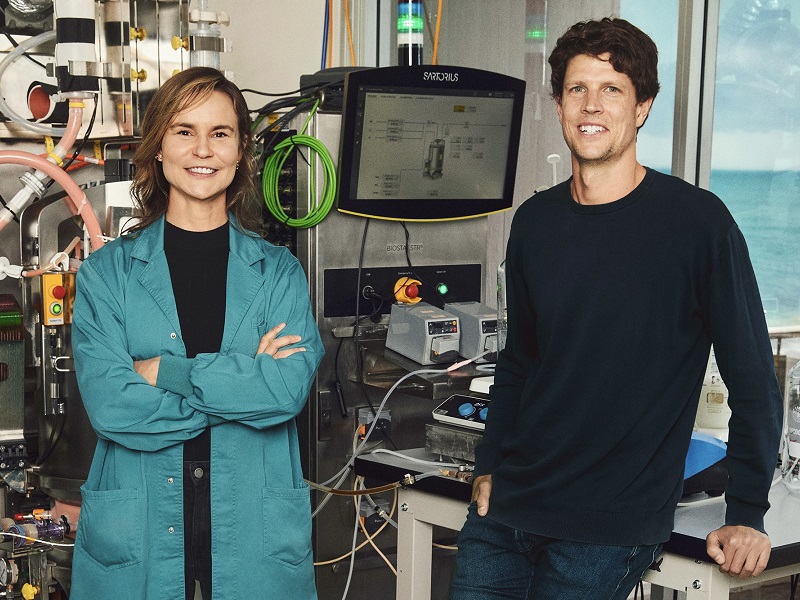
Based out of the University of Western Australia’s Indian Ocean Marine Research centre, the startup has developed a novel way to turn seaweed into Polyhydroxyalkanoates (PHA), a biodegradable polymer.
PHAs currently account for only a tiny slice of bioplastics manufactured around the world due to their high production costs, despite their unique benefits over other types.
But Dr Reisser said the company’s competitive edge lies in its low-cost salt water fermentation process, which she said could be the breakthrough needed to penetrate the plastics market.
“What’s magical about that material is that you can reuse it. It’s technically recyclable, just like plastic, but at the same time, it’s truly biodegradable, so you can compost it,” Dr Reisser told InnovationAus.com.
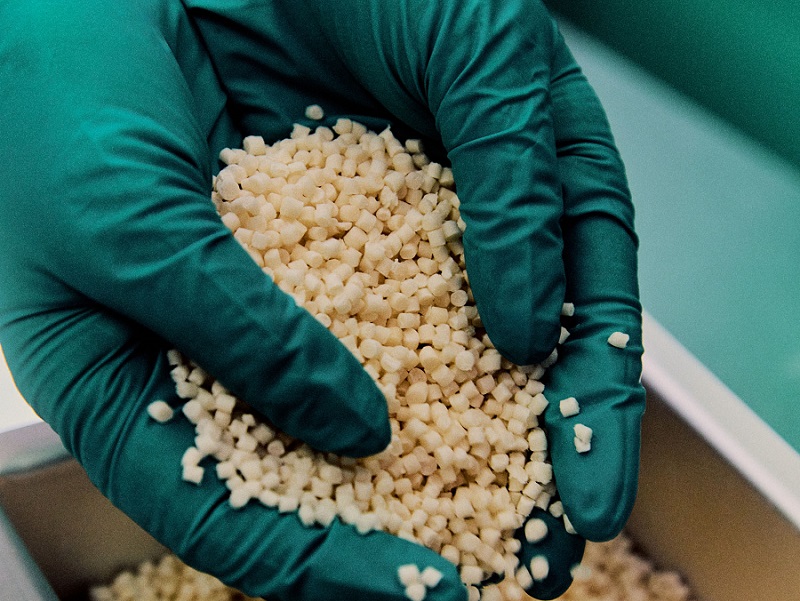
The output of Uluu’s extraction process is a pellet that has been designed to slot into existing manufacturing processes so that brands can easily swap out petrochemical plastic pellets for plant-based ones.
“What’s exciting about our pellets is that they are plug and play with existing plastic manufacturing equipment, so downstream from our factory it’s pretty much business as usual,” Dr Reisser said.
“[Manufacturers] can purchase the Uluu pellets and then melt them down… so they can produce exactly what they used to produce, but now use this material that is made of seaweed, rather than fossil fuels.”
Dr Reisser, who started her career researching the effects of plastic pollution on marine life before shifting to find a solution to the problem, said the company is targeting the cosmetics and fashion industries.
Initial customers include Australian clothing brands Papinelle and Quicksilver, which are using Uluu’s seaweed-derived polymers for clothing and, fittingly, combs for removing surfboard wax.
But Dr Reisser said the company’s “big dream” is for an Uluu textile to replace polyester, a major input in the fashion industry that contributes around 11 per cent of total global plastic waste.
“We’ve been developing a second product, which is a material suitable for the production of yarns and textiles out of Uluu. And all going well that textile can replace polyester,” she said.
With the funding from the Series A, the 23-strong company plans to build a demonstration plant next year that boosts production capacity from its current 100 kilograms of material a year to 10 tonnes per year.
“After four years’ work developing this technology, including two years’ running our pilot plant, we’re excited to take this next step and start delivering meaningful volumes of our materials to customers,” Mr Kingsbury added.
“The demonstration plant is a critical step in showing Uluu can scale to truly compete with and replace fossil plastics.”
Dr Reisser said tackling the problem of plastic pollution will require a joined up policy approach, one that starts with replacing petrochemical plastics as an input but extends to better industrial composting systems.
“We are true believers that we can solve food waste and plastic pollution by incentivising better materials coming to the market. But also deploying composting systems so we can enable this circular bio economy,” she said.
“For Uluu to really thrive and be good for the world, we rely on systems like FOGO, where there is composting for households, coming through. And if that happens, then we’re going to be tackling not only plastic pollution, but also climate change…
“At the moment, we have this ugly reality of all of that heading to landfill and becoming methane and contributing to climate change while our soil is consuming petrochemical fertilizer.”
Do you know more? Contact James Riley via Email.