
Australia’s chief scientist Tony Haymet has issued a blunt warning that the nation must seize the AI and data centre opportunity by creating homegrown intellectual property – not just by hosting foreign hyperscale infrastructure.
“We have to make sure we’re AI makers, not AI takers,” he told The Commercial Disco podcast.
Professor Haymet says Australia risks becoming a passive processor for global tech giants unless it links the coming wave of data-centre expansion to domestic capability and sovereign innovation.
He said the government’s push to attract hyperscale investment and build AI infrastructure must be paired with opportunities for Australian researchers, engineers and startups to develop their own tools and IP.
“We don’t want to just process calculations for Google and Microsoft,” Professor Haymet said. “We want the opportunity for young inventors in Australia to create the next AI tools.”
It’s a message with particular weight at a time when big tech firms are preparing to deploy unprecedented levels of capital into Australian renewable energy, compute and land – and when the scale of AI-driven demand threatens to outpace national infrastructure planning.
Professor Haymet said the speed of the shift, and the sheer global competition for specialised chips and talent, means Australia must “urgently” design its own leverage, not simply provide the electrons and real estate.
That also requires early and honest engagement with local communities. Massive compute farms bring environmental, water and planning impacts that cannot be ignored.
“There are many communities in Australia who will say yes,” he said. “Some may choose no. We need to consult early about the pluses and minuses of hosting these facilities.”
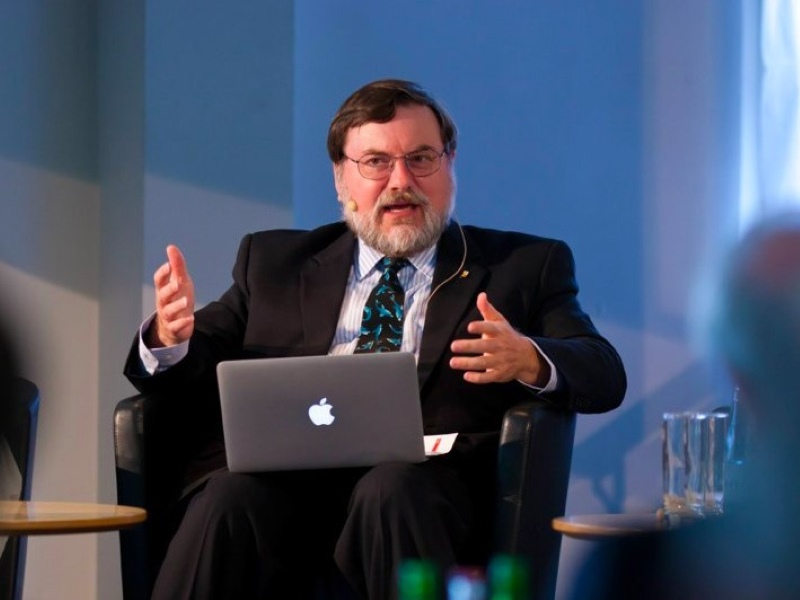
Beyond AI infrastructure, Professor Haymet identified misinformation and disinformation as a priority area for the National Science and Technology Council (NSTC), noting that Australia is failing to maintain its once world-leading vaccination rates.
He said an upcoming government campaign will highlight surprising findings about who is most vulnerable to misinformation, not just young people.
“People my age and older are actually quite susceptible,” he said. “We’ve already seen measles outbreaks, for heaven’s sake.”
The chief scientist also confirmed that major work has been completed on national research infrastructure, including the need for an explicit priority list covering high-value scientific assets.
He argued such a list is essential not only for Treasury planning, but for identifying which instruments require a national security overlay – and which may be accessed via international partnerships rather than purchased outright.
Do you know more? Contact James Riley via Email.