
The US government’s decision to block global access to Anthropic’s powerful new Fable model highlights both the deficiency of Australian regulation and the need for Australian sovereign AI capability.
Fable, released just over a week ago, was a significantly more powerful model running inside the Claude chatbot which Anthropic claimed was close to its unreleased and protected Mythos model. Anthropic released this model with guardrails around cybersecurity, biology and chemistry.
Despite these guardrails, the US government apparently advised Anthropic that the model still represented a risk. Anthropic contests that there is hard evidence of such a risk.
Regardless, the idea the US government has taken action on safety grounds to control a product once available in Australia highlights a glaring deficiency in our own regulatory system.
There is currently simply no ability for Australia to take similar action. If Fable poses risks to Australians, only the Australian AI Safety Institute has ability in theory to look into the matter, but it lacks the powers to do anything about it.
AI models are tools built with general ability and the government’s current regulatory strategy is to hope that each regulator is able to address AI-driven risks in its own areas of responsibility. Operating this way, though is like putting puzzle pieces together but never getting to see the whole picture.
AI models have not been developed thinking about whether ASIC or Home Affairs might have an interest. They’re developed transnationally with general capabilities and general guardrails and to deal with this we need an over-arching general authority.
The AI Safety Institute needs to have powers to license the operation of these models in Australia, so we have the sovereign capability to deal with general risks, as the US Government has asserted.
Without this capability, Australia will have effectively outsourced AI safety to Donald Trump.
There’s another, murkier motivation for the US government whacking export controls on AI. If the model is too powerful, why would Trump let adversaries, competitors or allies get access to it? (His recent trade actions make it difficult to see which category Australia fits in on any given day.)
More and more public services, key parts of our infrastructure, and major businesses are busy integrating AI into their processes.
The rollout of AI has been subpar, businesses are often ignoring their legal obligation to consult with workers on the decision to introduce AI, and it has been introduced in pernicious and malicious ways including to surveil workers. This experience is driving Australians’ fundamental distrust of AI.
These tools are increasingly powerful and regardless of the rollout, Australia is reliant on the whims of foreign governments for access to what could be incredibly powerful tools and inputs into our businesses and government services.
As these get more deeply integrated, Australia is more vulnerable to unilateral actions like this that might cut Australia off entirely. While the US government has slammed the door shut on Fable, we don’t have a plan if they lock up access to US-based AI. We don’t have an alternative if Trump decides to put on a token-tariff.
Every day that Australia gets more reliant on US-based AI we become more vulnerable and grow less sovereign.
This exact scenario is why the ACTU is calling for safe, sovereign AI. We need an effective and powerful AI regulator to keep Australians safe and sovereign AI to ensure we have domestic capacity to manage these powerful tools.
Other nations like France, the UK, Germany, Sweden, Switzerland, and South Korea are each investing in building sovereign and domestic capability in AI for precisely the same reasons.
They see the importance of not becoming a ‘vassal state’, as Arthur Mensch, the chief executive of French AI company Mistral put it, a scenario in which a notionally independent country becomes subservient to a more dominant power lording it over them.
By letting the actions of the US government dictate both what is safe for Australian workers and what is available to our people, businesses and public services; we risk just that fate.
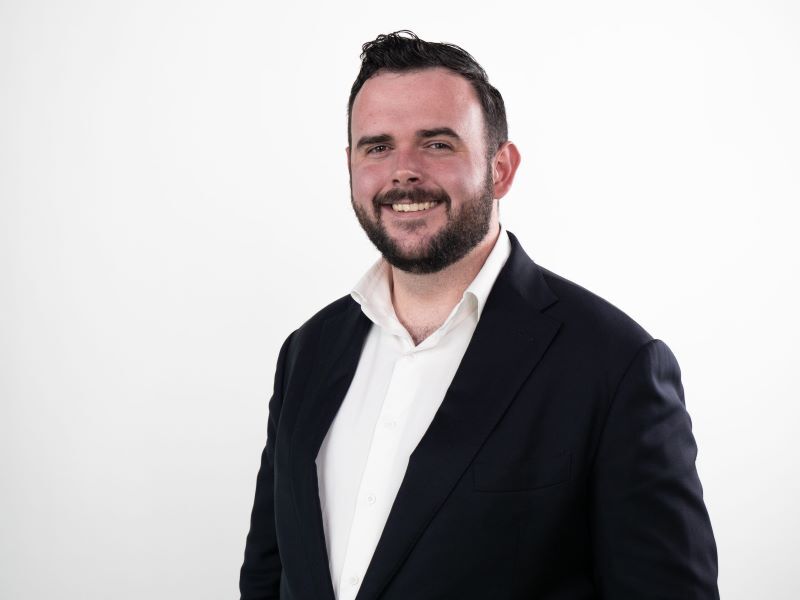
Joseph Mitchell is Assistant Secretary at the Australian Council of Trades Union (ACTU).
Do you know more? Contact James Riley via Email.