

Larry Marshall spends a lot of time talking about ‘market vision’ these days and how the concept can be applied to a national innovation system. Australia, he says, needs to settle on its market vision.
It sounds ephemeral but is in fact a pretty well-worn playbook. It’s the systemic process that entrepreneurs use to look ahead, to see where they think the world could be disrupted, and then put together the ingredients to build the product that meets that disruption.
In Larry Marshall’s telling, market vision in the entrepreneurial context is analogous to gravity; it is a force that drives alignment.
In this episode of the Commercial Disco podcast, the interim chancellor of Australian National University and lead independent director of mining giant Fortescue talks to InnovationAus.com editor Corrie McLeod about how market vision can be applied to national policy.
Mr Marshall is a former chief executive at the CSIRO and applied market vision thinking to the way he re-directed and restructured of the national science agency.
When he arrived at the organisation, he said CSIRO used to “boil the ocean. It had some fantastic curiosity-led research, but it was too much like a university”. There were 39 universities in Australia – but when agency started 100 years there was just a small handful.
“In the modern era, CSIRO needed a different role, and we saw the role as being the bridge between great research and universities [and industry],” Dr Marshall said.
“We saw that as a bridge where CSIRO could actually help carry those inventions across from university and academia and get it into Australian industry.”
Which brings us back to the way in which market vision and the national innovation system.
Dr Marshall says setting policy goals and aspirations through things like ‘missions’ and setting national challenges – and then aligning the skills, capability and resources to meet those challenges – is another way of describing market vision.
He looks back to the Innovation and Science Australia Prosperity through Innovation report chaired by venture capital doyen Bill Ferris. The review set out a series of ‘moonshot’ national challenges and put forward a bunch of recommendations that aligned under those challenges.
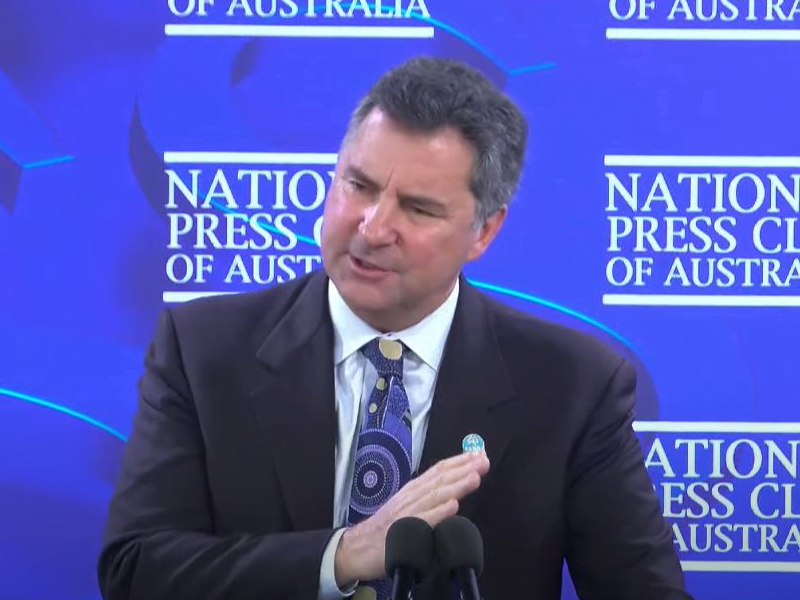
By setting those national challenges – which requires an understanding of where the nation has capability and where its resources should be directed – Mr Ferris recognized that Australia needed to “have a clearer market vision for itself.”
Malcolm Turnbull as Prime Minister then took Bill Ferris’ recommendations to create the National Innovation and Science Agenda. That drove massive growth in venture capital – with the number of VCs growing from a small handful to more than 100.
CSIRO took the national challenges idea and focused down to six specific areas where the science agency believed it could move the needle at national scale.
It also created the Main Sequence venture fund to commercialise invention, and created the ON Program – modelled on the US i-Corps – which aimed to teach researchers commercial fundamentals and entrepreneurship.
Dr Marshall says the NISA programs had some success and continue to build momentum. The same will be true of the Robyn Denholm-led Strategic Examination of R&D, which also features national challenges and market vision.
“What Robyn [Denholm] did with the SERD review was recognise that all of these things need to be aligned. They all need to be connected and kind of aligned in the same direction,” he said.
“That’s why I go back to the market vision is the gravity because it’s the thing that pulls everything through. If you get the market vision right, you will get success.”
Do you know more? Contact James Riley via Email.