
Miah Hammond-Errey has had a career within the national intelligence community building strategies and programs that harness big data and emerging technologies to help meet national security objectives.
It has been an enduring passion that has brought her into close contact with high-performing teams across the military and intelligence communities, as well as private sector providers – each with varying kinds of national security objectives.
Now Dr Hammond-Errey’s attentions have been turned to the potential for cognitive performance improvement in the individuals that make up these high-performance teams.
Dr Hammond-Errey has founded a startup business that has created a technology platform that sets benchmarks and measurement criteria for improving cognitive readiness and resilience.
In this episode of the Commercial Disco, Dr Hammond-Errey examines the challenges of cognitive resilience in information intensive environments, and how the very real lessons of national security teams can be applied across other environments.
And she discusses what it takes to bootstrap a hardware/software startup in a heavily contested market space – think of Garmin and Whoop as adjacent products – from Australia.
In addition to running her startup StratFutures, Dr Hammond-Errey is currently a residential Fellow at the NATO Defense College in Rome, where her research examines cognitive resilience to state-based information threats for defence and national security leaders.
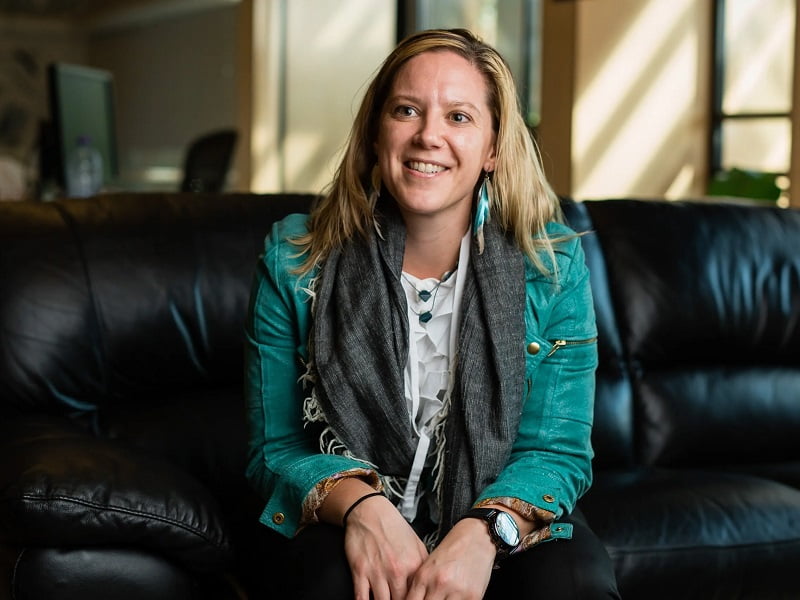
The NATO Defense College fellowship dovetails with StratFutures work, where she is spending 6-plus months looking at how to improve cognitive resilience in leaders.
“I’m interviewing people that have experienced Russian or Chinese information warfare. That’s leaders in national security [roles], and some academics, and then trying to draw some lessons for how organisations and individuals can improve their cognitive resilience,” he said.
Strat Futures set up our technology platform called the Cognitive Readiness and Resilience Platform. The program monitors physical and cognitive well-being through a wearable device, and then through data-driven activities to help improve things like sleep or focus or critical thinking.
“I think there’s also a real gap here. we’re in a sleep epidemic. People globally are not getting enough sleep,” Dr Hammond-Errey said.
“We’re also seeing the impact of AI technologies on people’s mental health, on their well-being, but also on their critical thinking and decision-making capacity.
“So, this is already a critical issue for high-stakes decision makers, who the platform is largely designed around. But there’s a really broad market, and as these technologies continue to impact our cognition.
“We’re going to need to get better at understanding our human responses to technology and how we improve not just our cognition, but also our physical performance.”
In addition to creating the cognitive readiness and resilience platform, Dr Hammond-Errey hosts two podcasts. Her Technology & Security podcast has featured current and former ministers, senior government leaders and intelligence officials from GCHQ, the CIA and ASD, among others.
More recently, she launched the Cognitive Edge podcast on leadership and human performance.
In a tech environment where optimisation is characterised as everything, there is huge interest in cognitive performance right now, and in particular in better understanding high-stakes decision-making.
Dr Hammond-Errey says that as the company has moved from paying customers beta-testing its minimum viable product, it has broadened its base of customers. Initially these high-stakes decision-makers were in harsh, stressful environments – from elite combat units deployed in the field to police and firefighters and emergency healthcare professionals.
But that base of customers has now broadened to C-suite corporate executives and other early-adopters who are “just really interested in performing optimally and understanding how to get the best out of themselves,” she said.
Do you know more? Contact James Riley via Email.