
Building sovereign semiconductor capability with secure and resilient supply chains is critical to Australia’s national and economic security. That is a simple reality.
But the semiconductor industry is not well understood outside of the cohorts who are immersed in it. And it is far from clear what our supply chains look like in this critical sector and where Australia has existing capability and competitive advantage.
The Semiconductor Sector Service Bureau (S3B) in March announced plans to lead a National Semiconductor Roadmap project supported by the Rozetta Institute.
Former Australian government chief scientist Dr Cathy Foley has been appointed to the National Semiconductor Road advisory group, and in this episode of the Commercial Disco outlines the industry imperatives driving the program.
The advisory board includes NSW government chief scientist and engineer Hugh Durrant-Whyte, with input from S3B chair David Skellern.
“The reality is that semiconductors and that [semiconductor] capability are part of what we need to live in a modern society,” Dr Foley told the Commercial Disco podcast.
“You need to [understand] it as a critical capability or technology, just like water and energy and food, that we need in order to live as a human these days.
“So being part of the supply chain internationally, making sure we’ve got the level of sovereignty is important. So something goes pear shaped with global politics that we’re not stuck high and dry is really critical.”
Relationships across international supply chains are important. Australia clearly cannot do everything itself, Dr Foley said. We need clear connections with like-minded countries so that if geopolitical circumstances go south, we have a pathway to economic and security resilience.
“And it’s almost a quid pro quo where we’ve got some aspects of the supply chain, [they] have some, and then we partner together. Having that clearly identified is part of what you have to do to make a semiconductor industry work.”
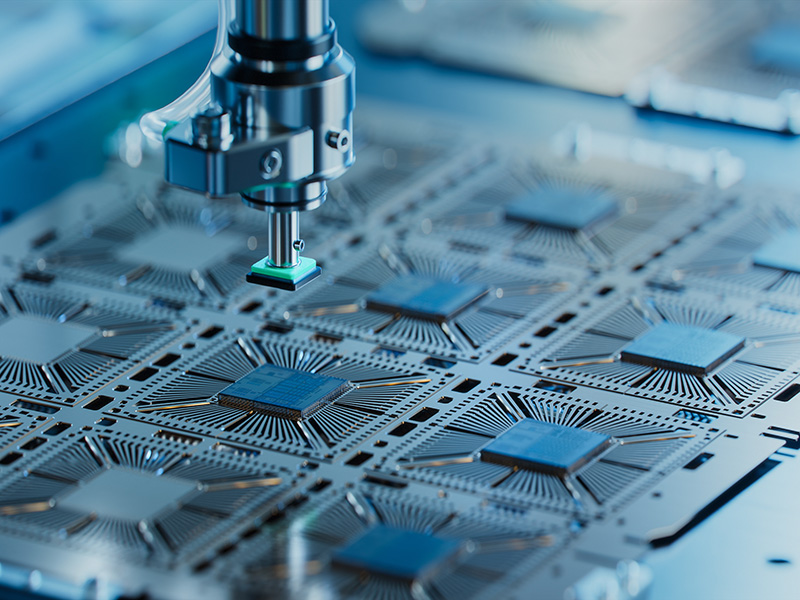
When people think about the semiconductor industry, they tend to think about microprocessors and Taiwan and silicon fab companies like TSMC, Dr Foley said.
But it is far broader than that. While Taiwan dominates the high-end of microprocessor fabrication, they still have to rely on others for the high-tech manufacturing systems that build those silicon processors.
There is no one country that can do everything itself. That’s the starting point for the National Semiconductor Roadmap, to understand where Australia fits in this supply chain.
Dr Foley says a big part of the National Semiconductor Roadmap will be a focus on quantum computing, and Australia’s quantum capability.
“It’s getting to that point where [Australian quantum companies] are scaling up, and that’s getting really interesting,” she said.
“Each of the quantum companies have got their own different model and plans and how they’re going to expand. But what we are seeing are extraordinary breakthroughs in silicon.”
Do you know more? Contact James Riley via Email.