
Today, in Sydney, Prime Minister Anthony Albanese made an important shift in Australia’s AI debate. Rather than treating artificial intelligence as simply another technology policy, he placed it at the center of Australia’s economic and social future, our national resilience and even our spirituality.
He challenged Australia to do more than simply adopt AI. He argued we should build it here. That ambition is exactly right. But if the new Office of AI is to succeed, it must focus on where Australia’s productivity will actually be won: in making things.
For too long Australia’s AI conversation has been split between two camps. One is captivated by frontier models, hyperscale data centres and the race to artificial general intelligence. The other focuses on regulation, copyright and risk. Both conversations matter. Neither is enough.
The test of the new Office of AI will be whether it can facilitate turning a general-purpose technology into real productive capability across the Australian economy. To do that, it must prioritise industrial AI.
The greatest economic gains will not come from helping office workers write faster emails. They will come from improving how Australia manufactures medicines, processes critical minerals, grows food, builds defence capability, maintains infrastructure and exports sophisticated products.
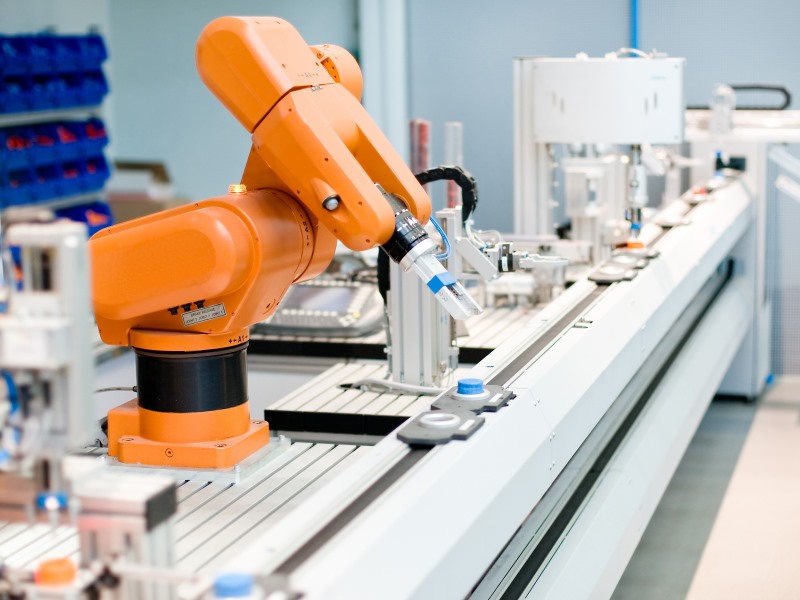
Industrial AI is where algorithms meet the physical economy. It combines industrial data, engineering knowledge, robotics, digital twins as well as AI embedded in machines rather than sitting in the cloud. It improves safety, reduces waste, lifts quality and helps manufacturers compete globally.
That is where the productivity lies. It is also where Australia’s future lies.
So when the Prime Minister said Australia should do more than adopt AI; that we should design it, make it and build capability here, I agree. But building AI capability means more than attracting overseas investment or constructing data centres. It means building the capability to apply AI inside Australia’s manufacturers, laboratories, mines, farms and hospitals. Otherwise, we remain consumers of other nations’ ill-fitting intelligence rather than creators of our own.
The Prime Minister also spoke repeatedly about sovereignty. Yet sovereignty is not secured simply because servers are located on Australian soil. It is secured when Australian businesses own the industrial data, engineering expertise and manufacturing capability that AI depends upon.
At ARM Hub we have spent six years helping hundreds of Australian manufacturers deploy advanced technologies. One lesson stands above all others: the business problem comes first. Then the data. Then the AI.
My recent visit to South Korea reinforced this lesson. AI is discussed not as a separate digital industry but as the engine of manufacturing competitiveness. Government, industry and research institutions share a common objective: applying AI to make manufacturers stronger.
The same pattern is emerging across Europe. Industrial AI has become a cornerstone of economic development. Ecosystems in Eindhoven, Kaiserslautern, Dortmund, Heilbronn and Stockholm are organised around applying AI to manufacturing, engineering and industrial systems—not chasing artificial general intelligence for its own sake. Their ambition is practical: smarter factories, stronger exporters and higher productivity.
The United States is doing the same but through different means, combining AI, robotics and automation with large private capital investment alongside large place-based innovation ecosystems to widen industrial adoption. China is similarly committing large public capital alongside private capital to become the world’s industrial systems leader.
Australia should not simply copy these countries. Our manufacturers are overwhelmingly SMEs. That should become our advantage. Australia should become the best place in the world for SMEs to adopt safe, sovereign and commercially valuable industrial AI.
The Office of AI should judge its success against five outcomes: establish industrial AI as a national priority; invest in sovereign industrial data infrastructure; create place-based adoption programs; connect AI policy directly with manufacturing in agriculture, defence, health and medicine, energy, critical minerals and housing; and measure success through productivity, exports and sovereign capability.
The Prime Minister spoke often about creating good jobs. Industrial AI offers one of the clearest pathways to achieving exactly that. Countries leading industrial AI are not replacing manufacturing with software; they are making manufacturers more competitive, enabling firms to expand, export more and employ more highly skilled people.
The Prime Minister is right to bring AI into the centre of government.
Now the Office of AI must spend as much time on the factory floor as it does in the data centre.
Because that is where Australia’s critical productivity challenge can be sustainably addressed.
And that is where Australia’s AI future will ultimately be won.
Cori Stewart is the founder and chief executive of the ARM Hub, based in Brisbane.
Do you know more? Contact James Riley via Email.