
The debate around artificial intelligence and data centres often begins with a simple concern: will they break the grid?
As cloud services, AI workloads and digital infrastructure expand, Australia is facing a new wave of electricity demand. The question is no longer whether that demand will rise. It is how quickly the country can build the generation, transmission, firming and resilience needed to support it – while still meeting its decarbonisation goals.
But this episode of Powering What’s Next, a podcast series produced by InnovationAus.com in partnership with GE Vernova, makes the case for a more nuanced view.
Data centres are large energy users. But they may also become important participants in Australia’s energy transition: underwriting renewable energy projects, supporting firming investment, helping stabilise the grid, and bringing forward infrastructure that might otherwise take years to build.
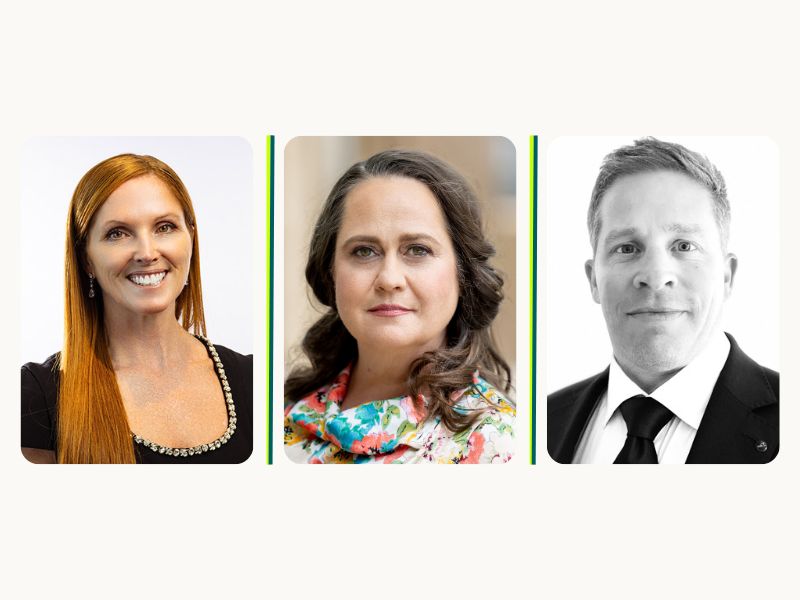
This episode brings together Mark Benjamin, Aero global sales director at GE Vernova, and Belinda Dennett, chief executive of Data Centres Australia, to examine where data centres, demand and decarbonisation collide.
GE Vernova was purpose-built to bring together global expertise in wind, gas, grid and digital technologies to address major energy transition challenges. For Mr Benjamin, the data centre opportunity has required GE Vernova to think across its own technology portfolio.
The company has established an Australian Data Centre Council, bringing together its power, electrification, renewables and energy consulting businesses to serve the local data centre market.
“Our individual businesses interact with data centres at potentially different times, but there was potential to work together and present a solution that’s greater than the sum of our parts,” Mr Benjamin said.
That systems view matters because Australia’s energy conversation can easily become too narrow.
Ms Dennett said much of the public debate is focused on the need for more generation, while missing equally important questions about firming, transmission and the role data centres can play as stable buyers of renewable energy.
“We need to think about how we build our energy system more holistically,” she said.
Data centres are often discussed only as large power consumers, but Ms Dennett said they can also support demand management and grid stability.
A data centre operates 24 hours a day, seven days a week. It does not shut down for weekends or public holidays. That constant demand can be valuable in a system with large amounts of solar generation, particularly during periods when household and industrial demand drops but renewable supply remains high.
Ms Dennett pointed to Melbourne’s AFL grand final weekend as a practical example. On a sunny, mild public holiday, industry demand was low, air-conditioning loads were limited, and the grid had large volumes of solar. Data centres continued operating through that period, absorbing power at a time when the system needed demand.
“How can we play more of a role than just an energy user?” posed Ms Dennett. “It’s our ambition to think about that more holistically.”
That point is becoming more important as the numbers grow.
Ms Dennett said Data Centres Australia expects data centre demand to reach 3.2 gigawatts by 2030. Mr Benjamin noted that existing data centre capacity is already around 1.5 gigawatts, with growth to around three gigawatts representing a notable shift.
For context, he said the Tomago aluminium smelter in NSW – the single largest load in the National Electricity Market – is around 900 megawatts.
“That puts into perspective that this incoming load is a big step change,” Mr Benjamin said.
But both speakers cautioned against letting the conversation be driven by hype.
Ms Dennett said Australia needs to distinguish between genuine demand and what she described as “phantom demand”: speculative or duplicative applications that may never progress because they lack capital, approvals, design plans or credible developers.
Those inflated pipeline numbers can distort the public debate and create unnecessary anxiety.
“If we are grounded in what the supply looks like and what the demand looks like, I actually think we’re in pretty good shape,” Ms Dennett said. “Australia has one of the most robust, secure grids anywhere in the world. We can do this, but we need to be working together, doing it methodically.”
The firming question is central to that task.
Mr Benjamin said Australia’s energy transition is seeing coal move to renewables, firmed by gas and increasingly supported by batteries. Renewable generation is intermittent by nature: wind turbines produce when the wind blows; solar produces when the sun shines. But the system still needs backup power, stability and inertia when those resources are not available.
“In simple terms, it’s backup to the renewables generation,” Mr Benjamin said.
Data centres can help here too, by providing demand certainty for firming projects that might otherwise struggle to secure finance.
“I think there’s a huge role for data centres to play in underwriting some of those firming projects,” Mr Benjamin said. “The market settings in the NEM do make it difficult for those projects to get up.”
Ms Dennett said data centre operators are already playing a significant role in renewable energy investment. Forty-five per cent of power purchase agreements with renewable energy projects are signed by data centre operators, and around 70 per cent of data centre energy use is offset by either power purchase agreements or large generation certificates.
The sector wants to reach 100 per cent, she said, but warned against overly prescriptive mandates that could undermine what is already working.
“An off-take agreement isn’t the only factor between an energy project being viable or not,” Ms Dennett said. “People seem to think if the data centre operator gives it some money, it will just happen.”
Wind projects can take seven to 10 years to move through approval processes. Matching that timeline with a data centre build, which can happen much faster, is difficult. The project still needs to be viable, backed by credible investors, connected to the grid and supported by a supply chain.
“If they’re not going to deliver electrons to the grid, it’s neither helpful to the data centre operator nor helpful to the energy transition,” Ms Dennett said.
There is also an important distinction between different kinds of data centres.
Mr Benjamin said cloud data centres, which support services close to end users, will generally remain grid-connected because they need to be near population centres and critical infrastructure customers.
AI data centres may have more flexibility. Some hyperscale AI projects are looking at ‘behind the metre’ models, where they bring their own power, at least in the initial phase.
Those projects are complex because the construction of power infrastructure and the construction of the data centre need to align. But Mr Benjamin said they also create future opportunities for data centres to feed power back into the grid and support the system.
That is why Australia’s response matters.
Mr Benjamin said Australia has a major opportunity not only to serve domestic cloud and AI demand, but to become a regional and global digital infrastructure leader. Its submarine cable connections mean the opportunity is not limited to the domestic market.
“There’s a huge opportunity for Australia to be one of the leaders in this space, not just domestically but internationally,” he said.
To capture that opportunity, projects need to become easier to build.
Mr Benjamin said there is a risk that misinformation and fear about data centres obscures the bigger economic and infrastructure picture.
“I don’t think it’s overstating it to call this genuine nation-building,” he said. “The decade-long buildout of data centres will support thousands of jobs across the country.”
Ms Dennett said Australia’s position is also very different from the United States, where much of the global anxiety about data centre energy use originates.
Australia has a stronger regulatory framework in place, she said. Under the National Electricity Rules, data centre operators and other large load users are required to pay 100 per cent upfront for their own grid connections and any required network augmentations. Data Centres Australia research puts that investment at $10.3 billion between 2020 and 2030.
That investment can benefit the broader system.
Data centres can help bring forward energy and transmission infrastructure. They can also contribute to other enabling infrastructure, including water systems. Ms Dennett said data centres use modest amounts of water in cooling and are investing in water treatment, recycled water systems and local connections that can support surrounding communities.
“Housing and data centres can go hand in hand and work together,” she said.
The central message from the episode is that Australia’s AI infrastructure debate needs more precision and less panic.
Data centres will increase electricity demand. They will require generation, firming, transmission and careful planning. They will also need to earn social licence as communities ask questions about energy use, water, land and local benefits.
But treated properly, they can also help accelerate the energy transition by creating demand certainty, underwriting renewable and firming projects, paying for new connections, and bringing forward infrastructure that supports the wider economy.
As Mr Benjamin put it, “Data centres will help accelerate the buildout of the energy transition, whether that’s transmission or power generation across the spectrum of generation sources.”
That may be the more useful frame for Australia: not whether data centres are a burden on the grid, but whether they can become one of the forces that helps build the next one.
Powering What’s Next is a sponsored podcast series produced by InnovationAus.com in collaboration with GE Vernova.
Statements attributed to GE Vernova representatives may include forward-looking statements. GE Vernova’s caution concerning these statements is available here. The GE Vernova logo is a registered trademark of GE Vernova Inc. GE Vernova’s terms of use around trademarks and copyright are available here.
Do you know more? Contact James Riley via Email.