
“By unlocking the value of a consumer’s data, the Consumer Data Right (CDR) has the potential to be a transformational piece of economic reform for Australian consumers, delivering more choice and access to the best possible deals on a range of financial products tailored to a consumer’s individual need.” – former Labor Assistant Treasurer and Minister for Financial Services, Stephen Jones, March 2025.
If only Labor believed the taking points their spinners publish for them.
Reports that Labor is quietly preparing to let more than 50 banks walk away from the CDR is disappointing, though hardly surprising.
The CDR was designed to give Australians the ability to share their data securely between providers, helping them switch and secure better deals, Labor themselves have heralded its benefits.
Stripping away these rights now would not just undermine reform, it would betray the very consumers the government claims to be helping.
The justification being offered smacks of political spin, and frankly, numerical illiteracy. Assistant Treasurer Daniel Mulino insists the measure would “improve uptake”, repeating a line he first used back in July when he complained that uptake had “not met expectations.”
But the evidence tells a very different story.
The ACCC reported that in the latter half of 2024, more than 530,000 Australians used the CDR across banking and energy, a staggering 135 per-cent increase from the previous six months. Between January and July this year, the regulator revealed the number had grown further, with more than 800,000 active users.
For a scheme that only really began operating in 2023, this is a resounding success, comparable with international programs.
So why pretend otherwise? Mr Mulino, with his strong economics background, surely knows the numbers don’t back up the spin. That may explain why Treasury is shrouding its moves in the language of ‘targeted consultation’, government shorthand for do it quietly, and only ask the insiders you want to hear from.
Yet no amount of bureaucratic phrasing can disguise the obvious contradiction: how does pulling more than 50 banks out of a consumer rights scheme possibly “increase” participation? The likely outcome is the opposite, fewer consumers, with fewer rights.
And let’s be clear about who gets hit. The targeted banks are smaller players, often regional, with customers concentrated in rural and lower-income communities.
These Australians are precisely the ones who benefit most when competition forces providers to sharpen their offerings. Labor’s message to them, however, is blunt: you don’t count because you don’t represent enough of the market.
When the Coalition established the CDR, it was with an ambitious, economy-wide vision. Banking and energy were only the starting points. The plan was always to extend it to telecommunications, superannuation, and beyond – enabling Australians to move providers and utilities with ease, in industries notorious for inertia and complacency.
Just look at today’s realities. Optus customers are left wondering whether their emergency calls will connect. A robust CDR in telecommunications could give them a seamless path to switch. Superannuation members, who entrust funds with their life savings, deserve the right to easily access and port their data, yet Labor shows no appetite to confront the vested interests of industry super funds whose boards are stacked with ex-Labor MPs.
Instead, expansion has been shelved. Worse still, Labor is actively cutting back the value the CDR is beginning to deliver in its existing sectors.
The contradictions are almost comical. Only last term, Labor legislated “action initiation” within the CDR, heralded by former minister Stephen Jones as a “game-changer.” It would have made switching simple and intuitive, building on the system’s strengths. Now Labor has quietly assured stakeholders it will never actually implement the power it already legislated. Window dressing without the windows.
Delivering the CDR was never going to be simple. Reform rarely is. But consumers engaging with the platform are starting to see the benefits. A government that valued competition, productivity, and fairness would build on that progress.
Instead, Labor appears intent on dismantling it piece by piece, protecting vested interests at the expense of consumers. That choice says much about Labor’s vision for the economy and even more about their priorities.
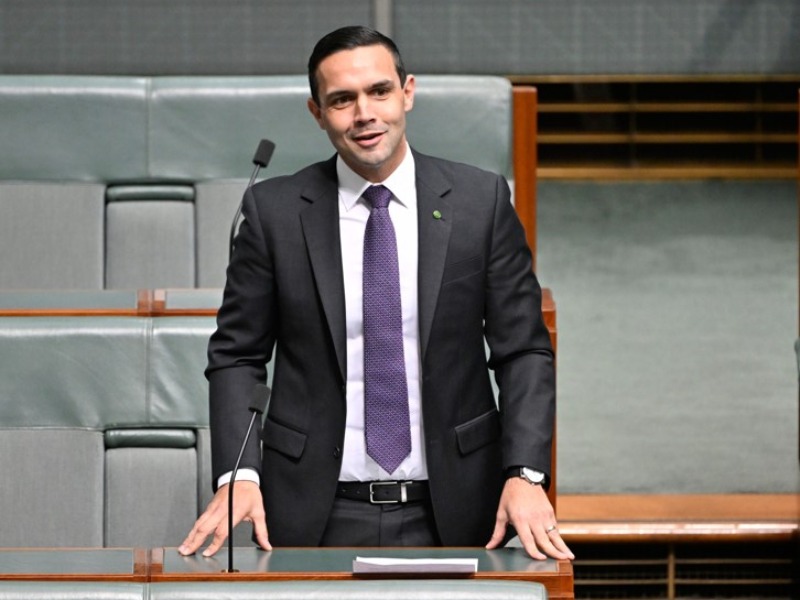
Aaron Violi MP is the Liberal Member for Casey, and co-chair of the Parliamentary Friends of Tech and Innovation
Do you know more? Contact James Riley via Email.