
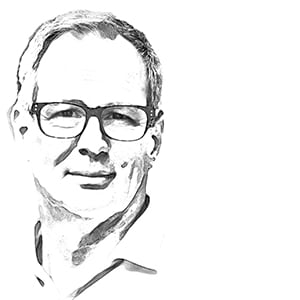
Prior to taking up her current position as Australia’s National Cyber Security Coordinator, Lieutenant-General Michelle McGuinness worked in a Five Eyes role, embedded within the US Defense Intelligence Agency.
A 30-year veteran of the Australian Army, Lt-Gen McGuinness was a deputy-director within the Agency, prioritising the impact of the Five Eyes arrangements across culture, policy and technology, to ensure the partnership was being fully leveraged.
The rationale, of course, was to ensure that as threats and technologies evolve, the five partners remain integrated and able to meet challenges as they emerge.
As Australia’s National Cyber Security Coordinator, Lt-Gen McGuinness wears a uniform to work but is based out of the Department of Home Affairs and reporting through the Minister for Cybersecurity Tony Burke.
In this episode of Delivery: A GovTech podcast, the Lieutenant General discusses Horizon 2 of the Australian government’s cybersecurity strategy to 2030 and draws a direct line between cyber resilience, national security, economic prosperity and societal stability.
“[Horizon 2] really is our chance to shift from building our foundations to really delivering resilience at scale across the entire economy,” she says pointing to the strength of the Australian cyber workforce as the first line of national defence.
She also discusses the role of the Securing Critical Infrastructure Act (SOCI) , and what it’s like to deal directly on critical infrastructure issues with multinational companies seemingly more powerful than nation-states, as well as the issue of sovereignty in a complicated geopolitical age.
Artificial intelligence is a big part of this conversation.
“AI is absolutely changing the way both we defend and we face threats. It’s changing substantially how we manage risk and how we build resilience for the future,” Lt-Gen McGuinness said.
“As a government, we have a real focus on a whole-of-system response, bringing together all arms of government and responding with the right expertise.”

The opportunities, the threats, the challenges and the guardrails need a system response, she says. Australia needs to adopt these new AI capabilities, for no other reason than that “they are here to stay”.
Since she was appointed to the role in 2024, Lt-Gen McGuinness has spent a great deal of time with the private sector, and in particular with the technology industry. There has been a huge amount to learn.
But the process gave Lt-Gen McGuinness a good view across the whole system. And Australia is in good shape, she says.
“We have world-leading legislation around the protection of critical infrastructure through SOCI,” she says. “Its agility has proven itself over the last few years as it has been updated.”
Against a backdrop of rapidly changing geopolitical circumstances, a constantly and fast evolving threat and tech environment, Lt-Gen McGuinness says the system has proved itself to be very agile.
“I think [we are] more agile than a lot of people expect from government machinery,” she said.
“Of course, we always want to do better, and we’re constantly working to understand and respond to the threats and opportunities. [But] I think we’re doing that incredibly well across our economy.”
Do you know more? Contact James Riley via Email.