
Renewables remain the cheapest new form of electricity generation, the CSIRO has again shown, even when accounting for decarbonised system costs that critics of the previous modelling claimed could change Australia’s energy equation.
The draft 2025-2026 GenCost report released on Wednesday found combination of solar PV, onshore wind, storage and either natural gas or hydrogen was the least cost technology mix in all cases examined.
The draft report also shows the capital cost of large-scale battery storage continues to drop significantly this year.
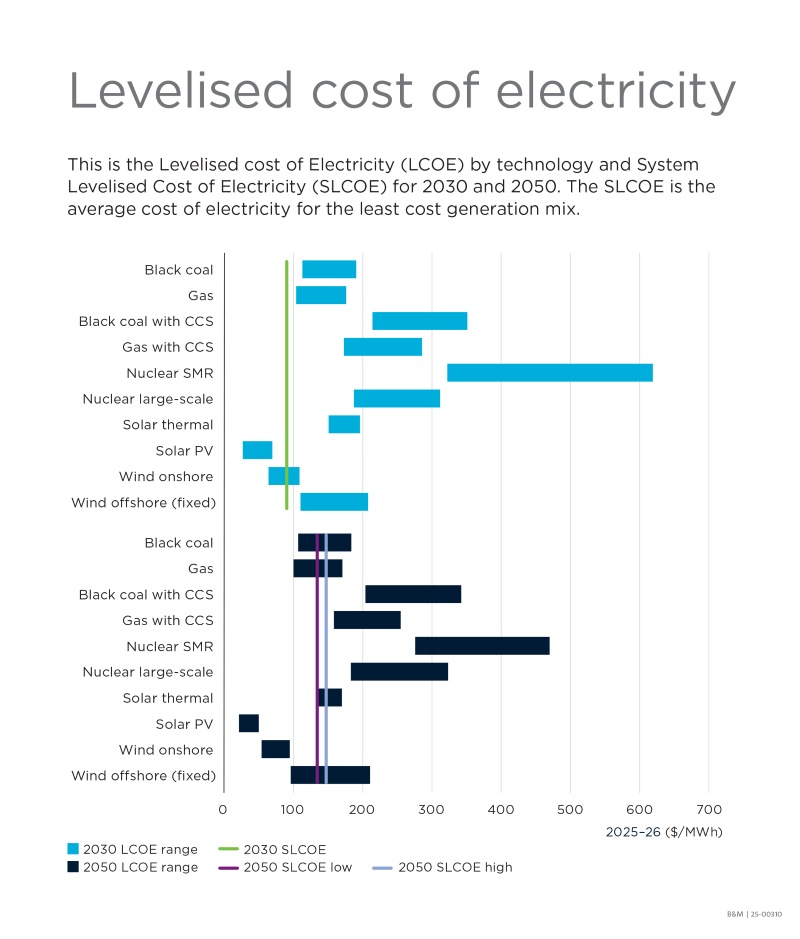
The latest report includes a new method that examines the electricity generation mix and the average cost of electricity for achieving Australia’s emissions reduction targets in 2030 and 2050.
In response to stakeholder input, the CSIRO added the new system levelised cost of electricity (SLCOE) method that estimates a mix of electricity generation sources and their running costs in addition to capital costs for emissions reduction scenarios.
“The combination of solar PV, onshore wind, storage and either natural gas or hydrogen was the least cost technology mix in all cases examined with the addition of carbon capture and storage, offshore wind and nuclear leading to higher average electricity costs,” the report said.
Nuclear technologies, which the federal opposition pushed for last election campaign and are part of its new energy policy, remain the highest cost technologies along with coal with carbon capture storage, according to the new report.
“Electricity systems will always require a diversity of resources to deliver all their functions and so no single technology will meet all the system’s needs regardless of its relative cost position,” CSIRO chief energy economist and GenCost Project lead Paul Graham said.
The draft report is open for public consultation now and will be finalised next year.
Do you know more? Contact James Riley via Email.