

Professor Roy Green did something at the Senate’s Select Committee on Productivity last week that doesn’t happen often in Australian policy circles. The UTS innovation adviser offered a public warning about the National Strategic Initiatives – the centrepiece architecture of the Strategic Examination of R&D report – saying they are “trailblazers on steroids”.
What he meant was that SERD National Strategic Initiatives were university-led with very little industry engagement, and that in his assessment these initiatives replicated of what came before under a new name.
Professor Green then asked the critical question sitting underneath the entire Future Made in Australia agenda: Iron ore is 25 per cent of Australia’s export mix, China is looking to Africa, and so “what are we going to replace it with?”
That is a significant question for a trusted academic to put on the table in a Senate inquiry. It is also the same question at the heart of Australia’s commercialisation gap. The significance is that this time it is finally being asked from inside the establishment, which changes the weight considerably.
Professor Green identifies that university-led programs won’t shift the dial on Australia’s structural industrial problem, and that the NSI architecture replicates the limitations of what came before it. Australia’s track record on this gives good reason to support that view.
There is a but…
Naming the problem isn’t the same as identifying the solution. Professor Green points toward better industrial policy coordination and manufacturing revival, but that won’t address who does the commercial translation work.
The research side of Australian innovation is high performing, and the demand from industry is real. What is missing is support for the commercial mechanism that turns research knowledge into market supply, and Australian vendors.
These are the companies with existing market relationships, commercial maturity, and the operational track record to deliver into global supply chains.
The policy conversation is catching up to the problem, as evidenced by Professor Green in the Senate inquiry.
Yet the companies capable of doing the translating remain missing from the policy conversation. Their absence is not due to a lack of ambition or capability; it is because commercial leadership has never been invited to the table.
Industry minister Tim Ayres committed $5 billion to low-emissions metals processing at Whyalla, Boyne and Tomago. It’s the right investment into the kind of economic actors Australia needs to get behind, producers building towards a low-emissions future rather than shipping the problem somewhere else.
However, the investment shouldn’t be exclusively into the facilities. Economic resilience also comes from the suppliers those facilities depend on.
The investment should also be directed to those Australian companies that are making those technologies right now, deciding whether their next market is here or offshore.
What does replace iron ore?
South Australia is the driest state on the driest inhabited continent, and it hosts billions of tonnes of stranded magnetite iron ore that remains uneconomic under conventional wet processing
DryFlow Magnetics changes that equation. They have developed a technology locally that separates high-grade iron concentrate from low-grade ore without water, producing DRI-grade feedstock for green steel.
This innovation is CSIRO-supported, globally patented, and backed by local investors. The founding team carries deep METS sector experience and global engineering partnerships already in place.
That’s the answer to Professor Green’s question, demonstrated in a test facility in Adelaide. Technology that makes Australian iron ore worth considerably more, and that connects the government’s low-emissions metals investment to actual competitive advantage rather than sovereign infrastructure alone.
The SERD panel was assembled to diagnose Australia’s commercialisation gap. It included financial governance expertise, academic administration, medical research translation, and startup agency leadership
Local industry suppliers were not represented, nor was anyone with real-world commercial leadership experience. Those designing the translation framework had little to no experience running companies that do the heavy lifting.
Professor Green identified this when he noted NSIs have “very little about engagement with industry”. The question isn’t just engagement, it is also evaluation.
How does the new National Resilience and Science Council identify which Australian companies have the commercial maturity to deliver on its innovation agenda, and what does that look like in practice?
Without this, there is a real risk $5 billion of economic benefit will flow through those facilities to vendors and innovators offshore.
We know what happens when you do bring commercial experience to bear. At METS Ignited, $16 million through vendor-centric programs generated $900 million in annual revenue growth and more than 1,000 jobs. That is not a framework, it is a result.
Senator Ayres named the new council “Resilience”, which signals industrial structure, not just research investment.
The question now is whether the council’s composition has the mix of skills and experience to include innovation supply or replicates the same advisory architecture that produced what Professor Green is challenging.
The investment in Whyalla, Boyne and Tomago is being made. Australian commercial capability and ambition are not in short supply. What is missing is a commercially focused policy system that knows how to find them.
Professor Green asked the right question, and the answer isn’t in the next institutional architecture.
It’s already operating in companies like DryFlow, and the many thousands of home-grown vendors across the country that policymakers have never thought to ask.
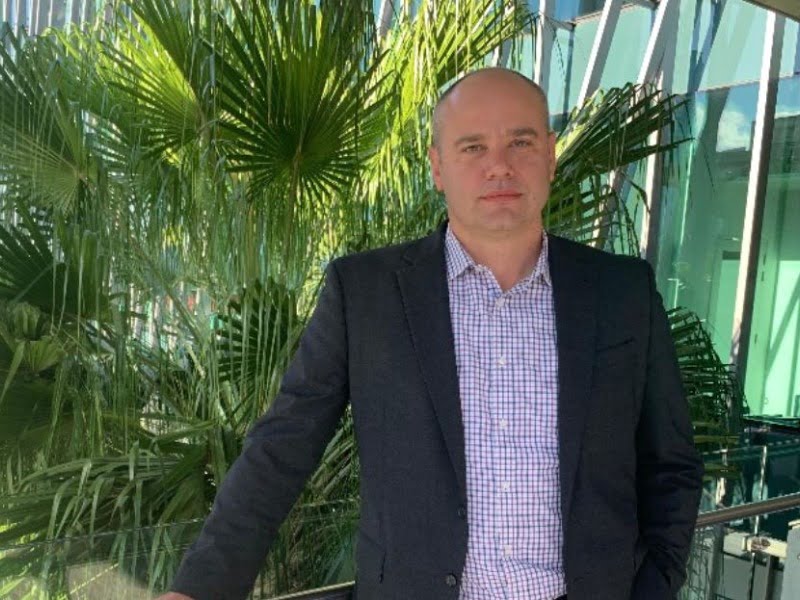
Adrian Beer is managing director of Australian Innovation Exchange and former CEO of METS Ignited, the Industry Growth Centre for Mining Equipment, Technology and Services
Do you know more? Contact James Riley via Email.