
The music industry is in the fight of its life, and if government changes copyright rules to enable AI companies to train their models in Australia, the creative sector’s entire business model could be scuttled.
Australian Recording Industry Association (ARIA) chief executive Annabelle Herd says this is an existential struggle, an unfair fight by local creatives against the vast resources of some of the richest companies in the world.
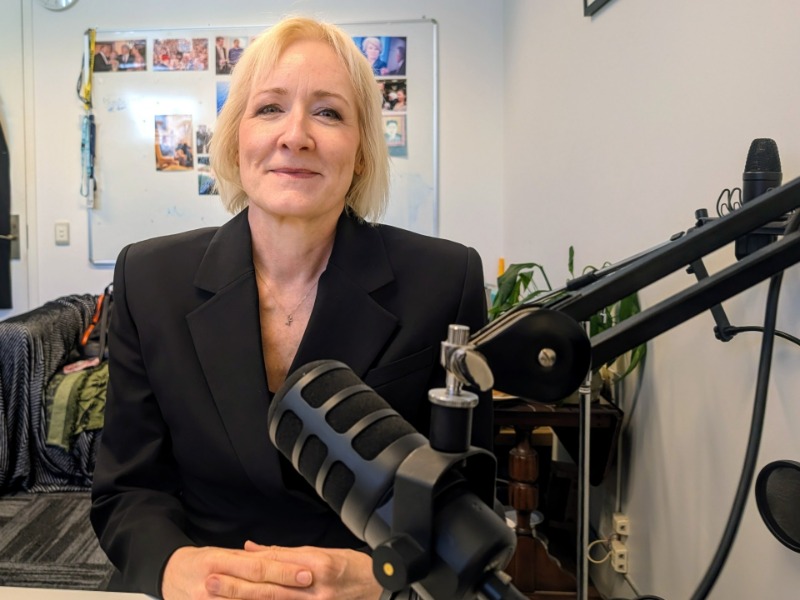
In this episode of the Commercial Disco podcast, Ms Herd critiques the work of the Joint Select Committee on AI, and explains why she believes the debate has been driven by a misunderstanding of copyright that the AI companies have been happy to perpetuate.
“We are in the fight for our lives right now. This is an existential issue for the future, not just of the music industry, but of the creative industries in this country [and] the media industry. And things are happening really fast,” Ms Herd said.
ARIA is fighting the proposed changes because they would hurt not just music, but film, books and journalism. And if Australia allows unlicensed copying for AI training, the exception would cover copyright material from all over the world – so long as the training took place here.
“That means we’re not only handing over Australian content, we are handing over the Beatles’ music, we’re handing over Taylor Swift’s music, we’re handing over the great literary works and all of the authors,” she said.
The case for changing the copyright rules to enable training rests on the idea that licensing creative works for AI is too difficult, and that dealing with individual rightsholders is impractical.
Ms Herd maintains that this is simply wrong. The music industry already licenses every major digital platform, and many of them are the same companies now asking for an exception.
“We don’t license on an asset level. We license through catalogues, and we license through global deals. You can license 90 per cent of the world’s sound recordings through four deals – Universal, Sony, Warner and Merlin, [which represents] thousands of independent labels,” she said.
“When I hear people say ‘I’d have to license with every artist’, that is just incorrect. Maybe it’s a deliberate misunderstanding, but it’s certainly not a correct reflection of how licensing music works.”
Rather than negotiate, the AI companies took the content. Rights holders are now suing those companies in the United States, where the copying took place, she said. And now the companies have come to Australia seeking a permanent workaround.
“They’ve come to Australia to seek a complete workaround, so that they never have to do a single licensing deal in Australia with any copyright owner ever,” Ms Herd said.
“[But music] is a real business. We’re not just a charity case… It is a weird world that we’re living in, where people are seriously contemplating a massive government intervention in a functioning commercial market to advantage one side in a commercial negotiation.”
Ms Herd says the issue is ultimately not money but control.
“It’s not about payment; it’s really about consent. It’s the consent part that is going to allow us to negotiate the best use of our material in AI and prevent the worst things from happening – prevent us from being completely substituted and replaced by AI music or AI film or AI books,” she said.
“If that happens, then we really are screwed.”
Do you know more? Contact James Riley via Email.