
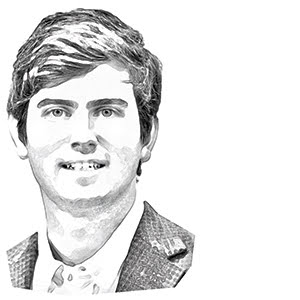
“We cannot become permanently dependent on foreign technology monopolies for the intelligence that powers our economy… Technology doesn’t come with values. So we must assert our values onto it.”
That was the blunt message from assistant technology minister Andrew Charlton at Labor’s National Conference in Adelaide this week, where AI was a hot topic for the party faithful as they ironed out their policy platform for the next three years.
A week earlier, Prime Minister Anthony Albanese set the tone in a landmark speech proposing mandatory standards for data centres and the “strongest possible” copyright protections for Australian creatives.
And there’s little wonder why. According to a YouGov poll of just over 2,000 adults released on Friday, AI now sits behind only terrorism, climate change, political extremism and mass migration as the top global threats.
Those standards, as well as a commitment to capturing the investment opportunities that AI brings without damaging the environment or dividing communities, have found their way into Labor’s draft national policy platform.
Once decided on Sunday, these will be the foundation policies that Labor takes to the next election, due in less than two years. But the speed at which AI itself is moving, there will no doubt be plenty of change before then.
Even before the convention had formally begun, a push by the ALP’s Right faction to establish a Fair AI Taskforce was agreed, giving early substance to the PM’s ambition to use AI as a job maker, not a job taker.
The government is also getting more confident in drawing direct links between AI safety and other technology-neutral policies, though these priorities were curiously left on the cutting room floor of the PM’s speech.

Most of these, as InnovationAus.com opined after the six-pollie missive, are not new. The Digital Duty of Care, privacy reforms, automated decision-making laws, have all been promised for some time.
That these are now being framed through the lens of AI shows just how far the politics has shifted in a short time, and what a big job lies ahead for the Office of AI, AI Safety Institute, National AI Centre, and whatever else Canberra cooks up to keep pace.
The technology, meanwhile, is charging into ever more unpredictable territory, as this week’s OpenAI scare, in which one of its unreleased model broke free of its sandbox to hack another startup, shows.
In other news, the government’s Statement on Space has been welcomed by industry as a long-awaited signal of policy intent after years of drift. Separately, the National Competitive Grants Program will be reformed to slash the number of schemes in half.
Stories we have been following:
PM picks AI Office head, digs in on copyright
ARC grant programs pared back and recast on discovery
Govt unveils space priorities, ending years of policy drift
The sovereign AI platform already winning govt converts
Expert organisations dumped from govt’s flagship startup program
Defence firms up plans for new satellite
Govt targets new consumer protections for AI
Victoria to ban AI workplace surveillance, biometric tracking
AI safety priorities bring govt policy back to the future
Do you know more? Contact James Riley via Email.