
For Australia to take full advantage of the global data centre boom while still managing its energy transition commitments, government must lift the 25-year-old moratorium on nuclear energy.
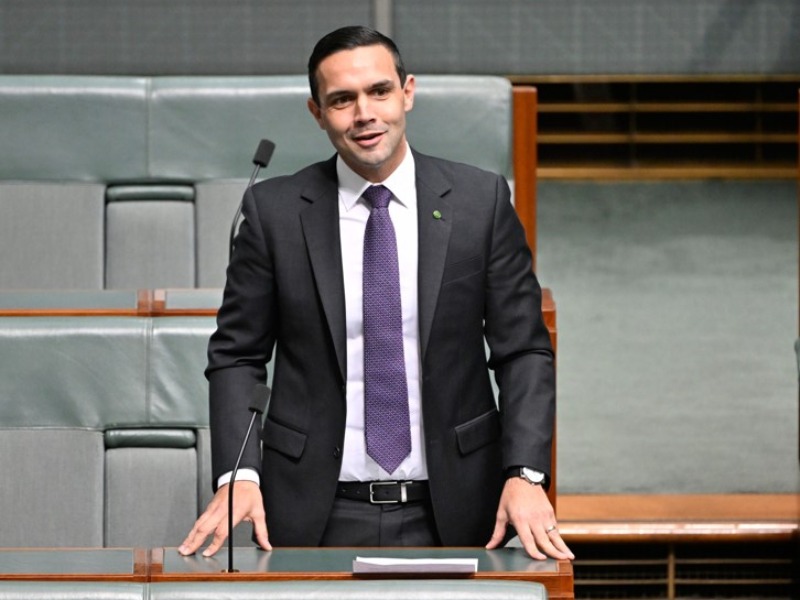
Shadow Digital Economy spokesman Aaron Violi says it does not make sense to pursue large-scale foreign investment in energy-intensive digital infrastructure without having a nuclear option as part of the conversation.
At a time when Australia is also focused on issues of energy transition and net zero emissions reduction commitments, nuclear energy should be considered, just as it is part of the energy conversation in other markets, he said.
In this episode of the Commercial Disco, Mr Violi – who is also shadow minister for Science, Technology and Innovation as well as shadow Cyber minister – discussed his priorities for the role.
Getting nuclear into the national conversation is one of those priorities. Mr Violi is one of the few MPs who arrived in politics from a career in technology when he was first elected in 2022.
He is also one of a tiny handful of Liberal MPs who actually increased their electoral margin (in his outer metro/regional seat of Casey on the eastern outskirts of Melbourne) at the 2025 Labor landslide election.
The reality is that data centres are an energy intensive activity, and the prospect of large-scale data centre investments in Australia meant – obviously – there are big implications for the national energy grid.
“With a lot of our base load power going out of the system, we need to have a conversation around energy,” Mr Violi said. “And as part of that, we need to have a conversation around nuclear power.”
In the US companies like Google and Amazon are making private investments in nuclear energy to satisfy their energy needs. They are making those investments because they make commercial sense.
“So [those companies] have made a commercial decision to invest in zero emissions, base-load power in the US,” he said.
“But they can’t look at nuclear as an opportunity to power their data centres [in Australia], and contribute to the grid in Australia, because of the moratorium.”
Australia has maintained a statutory moratorium on pursuing nuclear fuel fabrication, enrichment, or any kind of nuclear reactor construction since the late 1990s under legislation enacted when John Howard was prime minister.
The moratorium had enjoyed largely bipartisan support until the lead up to the 2025 election, when the Liberal-Nationals called for the ban to be lifted, and set out a bare-bones plan to build seven nuclear power stations.
The proposal attracted heavy criticism, largely related to cost when compared to renewables-based energy generation.
But Aaron Violi says the demands of data centres re-writes the economics. He says if private sector companies can see commercial reason to build nuclear energy facilities in the US, why stand in the way of such base-load power infrastructure here?
“Those companies can’t look at [nuclear] as an opportunity to power their data centers and contribute to the grid in Australia, because the moratorium [does not allow it].
“There’s a genuine question that needs to be answered: if a global business like Google wants to invest in nuclear in Australia and it’s commercial for them, why are we stopping them?
“Even when we want a zero emissions base load power for those data centres?”
“Why wouldn’t this government want large global businesses to invest in zero emissions base load power with no cost to the taxpayer?”
Do you know more? Contact James Riley via Email.
Fanciful to think Google or any hyperscaler would want to build a nuclear reactor in Australia. Hyperscalers want to build facilities now, not wait 15 -25 years for a power source. And then to think about the added project cost?
The last experience the US had of building new reactors were Vogtle Units in Georgia, they are a useful reminder of the realities of modern nuclear construction. Construction began in 2009, with the reactors originally expected online in 2016–2017. In reality, they entered service in 2023 and 2024. Costs followed the same trajectory. The initial estimate was about US$14 billion. Final costs are now over US$35 billion, more than double the original projection and the largest cost overun in US project history. Of course we could get the Chinese to build them 🙂