

Ever wondered what it’s like as a senior government official to work directly with a Big Tech giant on a critical national security issue? And how does it compare to dealing with a nation-state on a similar issue?
As a deputy secretary inside the Department of Home Affairs with responsibility for the Critical Infrastructure and Protective Services group Brendan Dowling knew exactly what these experiences were like.
And in his prior role as Australia’s Ambassador for Cyber Affairs and Critical Technology also had plenty of direct experience dealing with the complexities of vast multinational corporations as well as the complexities of nations, some large, some small.
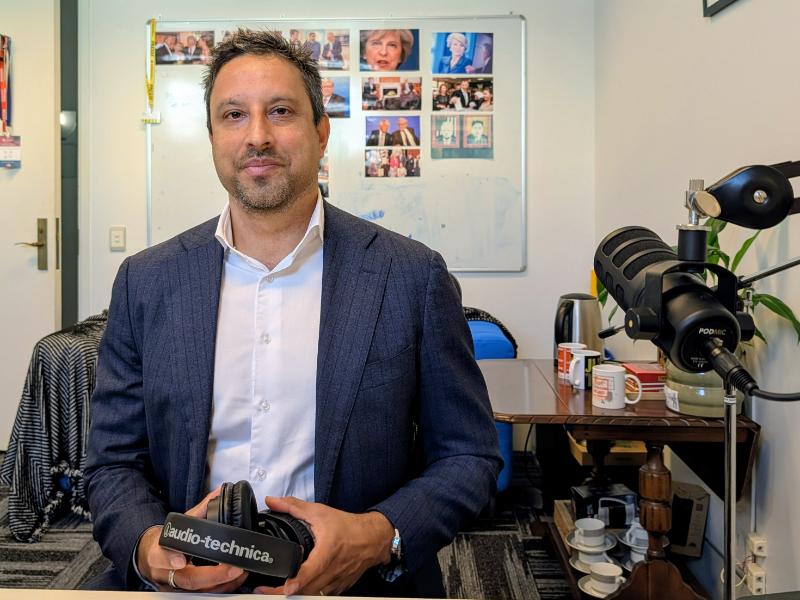
In this episode of the Commercial Disco podcast, Brendan Dowling discusses the ongoing national uplift in cyber security capability, the challenges presented by artificial intelligence, and Australia’s role in helping to shape global tech regulation.
It should be noted Mr Dowling was promoted a week or so ago. He is now also Australia’s Counter-Terrorism Coordinator, still within Home Affairs, but was a deputy secretary running Critical Infrastructure and Protective Services when this interview took place.
The critical infrastructure component of the role is heavy on partnerships in working with infrastructure of national significance operated by the private sector, but it is also a regulator, in making sure those companies and operators are meeting their obligations under critical infrastructure legislation.
But the group, which includes about 500 Home Affairs staff, also manages cyber security for federal government agencies, as well as all facets of information security, including physical security, classifications and the like.
Mr Dowling has also managed issues of national resilience: “We think about how does the nation withstand and recover from major disruptions, outages and malicious attacks across both the cyber vector, but also sabotage, insider threats and all manner of bad things that might happen.”
The critical infrastructure and protective services role at Home Affairs is central to Australia’s domestic security apparatus and involved layers of technology oversight, and layers of regulatory oversight.
In the digital economy, which is increasingly the foundational underpinnings of the whole economy, technology plays an outsized role as a provider of critical infrastucture.
Mr Dowling says tech companies often don’t fully appreciate the impact of their technology, and the importance of building relationships with government.
“They’re enormous organisations, they’re enormously powerful and influential, and when we look at the way that all societies and economies operate, so much of what we do rests on a foundation of digital infrastructure,” Mr Dowling said.
“So much of our security, so much of our working lives, our social lives are tied up in those major technology platforms, so the decisions they make are enormously consequential.”
“That’s something that’s not always appreciated by the companies themselves. I think some of the longest standing firms – companies like Microsoft – have understood their role in the world and their role in formulating policy. We don’t always agree with them, but they appreciate that.”
“I think some of the newer companies, [like] AI companies who are assuming a level of dominance at a rapid clip, haven’t necessarily appreciated how consequential what they do is.
“And why it’s super important for them to engage constructively with governments and people like me in my previous role and my current role (as the Ambassador for Cyber Affairs and Critical Technology).
In this podcast, Mr Dowling talks through the challenges of policymaking and designing laws and regulations in an area of technology that is moving so quickly and having such a big impact – artificial intelligence is the obvious example.
“One of the things we see at the moment is a lot of Australian firms, government agencies adopting AI tools. That’s really exciting,” he said.
“There’s a lot of benefits there, but your ability to do the due diligence on the security of those tools [can be difficult] … because these are black boxes.
“We’re quite worried about the rapid adoption of AI tools without the due diligence to say ‘what data does this tool have access to in your systems and what APIs is it going to exploit?’
“We find that some Australian firms are struggling to get clear answers from AI companies because of that black box feature.
“So we’re really emphasising the importance of dealing with trusted vendors and dealing with transparent vendors who have a good track record – before you roll out a tool that suddenly has access to your whole network and system.”
Do you know more? Contact James Riley via Email.