
Kate Abrahams spent three years proving she could access corporate data securely before anyone would pay for her AI-powered reputation prediction tool. Hanno Blankenstein ran 80 enterprise trials before raising seed funding for his infrastructure monitoring platform. Neil Alexander built and scaled a $6 million consulting business before he could prove his outcome-based software model worked.
Then, in the last 18 months, everything accelerated.
Traffyk.ai secured one of Australia’s largest listed employers and achieved 600 per cent revenue growth. Unleash live signed multi-year contracts with over half of Australia’s energy providers. Exogee now delivers ten times more customer value with the same lean team that struggled to gain traction two years ago.
All three companies are based at Harbour City Labs, the Australian Computer Society’s Sydney innovation hub. Their experiences reveal a pattern: the 2023 large language model (LLM) wave created unprecedented demand for specialised AI solutions — but only for startups that had already spent years building deep domain expertise before the market was ready to buy.
The validation marathon nobody talks about
The sudden acceleration masks years of unglamorous groundwork. Enterprise AI adoption doesn’t follow Silicon Valley timelines — even when the technology works. The paradox: visible scale happens in months, but invisible validation takes years.
Mr Blankenstein, chief executive and president of Unleash live, spent the company’s first three years focused almost entirely on proof of concept. Unleash live uses computer vision and real-time analytics to assess critical infrastructure — energy networks, transport corridors, industrial assets — identifying faults before they cause outages, injuries or bushfires.
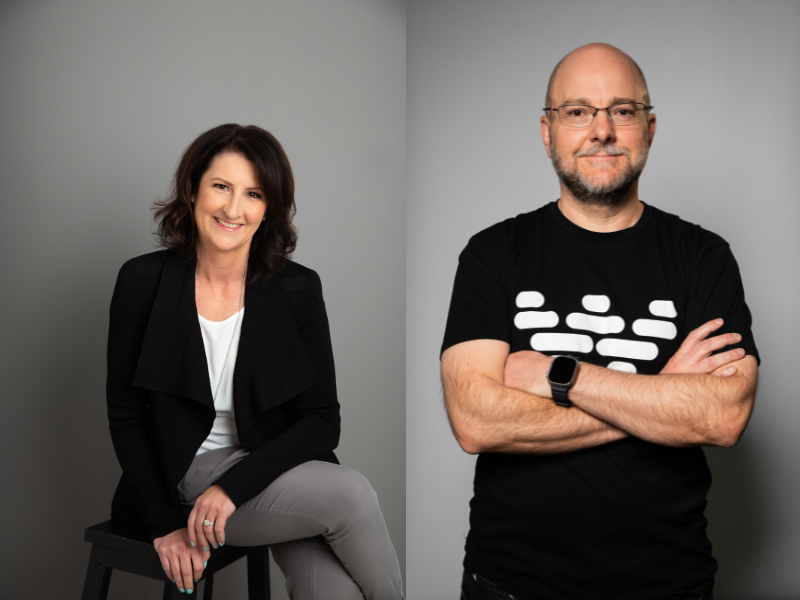
“We had to validate that the technology could operate reliably in real-world environments,” Mr Blankenstein says.
The company completed around 80 enterprise trials before their seed funding round. Only after nearly a decade of development does Unleash live now operate at true enterprise scale, analysing tens of millions of minutes of video each quarter.
Ms Abrahams, CEO and founder of Traffyk.ai, followed a similar path. Her company uses AI to predict corporate reputation crises before they become public, analysing internal workforce signals that historically went unrecognized as strategic risks.
“The first three years it was all about how do we get access to the data in a secure and cyber-friendly way that an enterprise organisation is going to trust,” Ms Abrahams says. “We’ve got ISO 27001. Once the data started flowing, it then became a race to find the right AI data team.”
The validation grind extended beyond technology. Securing one major customer required multiple proof-of-concept phases.
“It started as a proof of concept, which was extended to a longer proof of concept, which then rolled into a three-year contract,” Ms Abrahams says. “Enterprise software contracts are large, lumpy and take forever.”
For Mr Alexander, founder and CEO of Exogee, the path involved building an entirely different business first. His team scaled a software development agency to over $6 million annually before pivoting to their current model: “outcome as a service”, where customers pay proportionate to measurable business value rather than hours worked.
“We were creating enormous long-term value for other organisations without ever capturing it ourselves,” Mr Alexander says.
That insight led to Graphweaver, an open-source platform that creates a single consolidated API across multiple data sources, allowing organisations to unify data from CRM, finance, and HR systems without vendor lock-in.
Why enterprises suddenly wanted what they’d ignored for years
The 2023 LLM wave didn’t solve these startups’ problems — it made enterprises ready to buy solutions. GenAI tools created corporate AI literacy that transformed procurement conversations almost overnight.
“The conversations with our enterprise customers have changed dramatically,” Mr Blankenstein says. “We don’t need to educate the market any longer. They have AI functions being created with P&L responsibility, and we get things done faster.”
Enterprises now recognise they can access highly specialised AI capabilities — computer vision for infrastructure, predictive analytics for reputation risk, API federation for data — that they could never justify building internally. But the gap between LLM hype and execution reality creates both opportunity and risk.
“Smart executives are saying: ‘The LLMs are helpful but not solving specific problems we need to solve for,’” Ms Abrahams says. “We’ve got the peanut butter-chocolate combination: AI expertise plus subject matter expertise.”
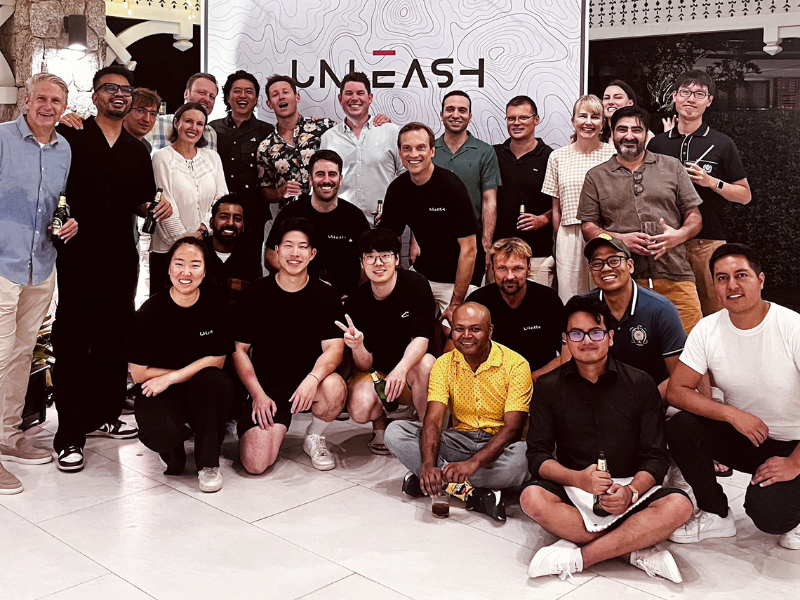
Mr Alexander is blunt about what he’s seeing: “AI slop is everywhere. If you’re an unskilled developer, you can produce something that seems really quick and really good, but it breaks, and you don’t know why. The really skilled developers are absolutely empowered by AI — so long as they don’t get lazy.”
That expertise gap is where these companies are capitalising. For every dollar customers spend with Exogee, they save about ten. Mr Alexander’s team recently rolled out an underwriting solution for a mortgage company that’s ten times faster than their existing SaaS provider.
Traffyk.ai’s 600 per cent revenue growth came after securing one of Australia’s largest listed employers — an organisation sophisticated enough to understand what specialised expertise they needed from outside.
From pirate ship to aircraft carrier
The breakthrough creates new scaling challenges. Mr Blankenstein’s team has grown from seven founders to over 50 staff, with plans to double again.
“Once you pass about 25 headcount you need to have a different internal operating model,” Mr Blankenstein says. “You need to move from being a pirate ship to very much a navy aircraft carrier. You have your rank and your file and your hierarchy. You need to have processes in place. You need to have standards.”
Cyber security and compliance requirements intensify alongside growth. “The cloud hype has kind of almost passed, and now it’s just fear and caution,” Mr Blankenstein says. “We first need to show how cyber secure we are—which is a huge burden—before you even have the right to work with enterprises.”
Mr Alexander has taken the opposite path, keeping Exogee deliberately lean. “We’re now delivering at least ten times the scale of customer value with the same headcount,” he says. “The bigger teams get, the harder it becomes to maintain speed and alignment.”
Both approaches face Australia’s talent constraints.
“The biggest challenge is finding really top-notch backend and frontend cloud engineers coupled with AI capabilities,” Mr Blankenstein says. His solution: “We have our head of engineering in Poland, with team members here who are more junior.”
Where execution-focused founders choose to build
All three founders have remained at Harbour City Labs through multiple growth phases — a pattern that speaks to what differentiates the environment from typical startup spaces.
“I was looking around at a whole pile of coworking spaces in 2021,” Ms Abrahams says. “This was where I thought the grown-ups came to work, as opposed to spaces where there was a lot of talk, a lot of kombucha, and bring your dog to work, but not a lot of actual success.”
Mr Alexander describes it as calibrated for companies that are executing, not ideating. “There’s a focus here on dev-oriented tech, cutting-edge tech,” he says. “It feels less ‘entrepreneur lifestyle oriented’ and more about actually doing work. All of the people here are doing something real—they are actually doing it.”
The professional environment matters when bringing enterprise clients on-site. “The positioning of Harbour City Labs is extremely professional, enterprise-grade work environment,” Mr Blankenstein says. “That aligns to our brand and how our enterprise customers want to see Unleash live.”
For Mr Blankenstein, the ACS network provided early international connections that proved critical. “Investment NSW and Austrade pulled us into the US,” he says. “That gave us great exposure to the US market. We were able to validate internationally, which any investor at this stage wants to see — because the Australian market is quite small.”
All three companies are now expanding internationally — Unleash live operating across the US and Australia with Series B funding, Exogee pursuing financial services clients globally, Traffyk.ai targeting the US and UK markets.
The companies emerging from Harbour City Labs demonstrate that building globally competitive technology from Australia remains possible. But the playbook has changed. Validation happens locally. Scale happens offshore.
AI is a productivity multiplier requiring deep expertise, not a magic solution. And the long enterprise sales cycle hasn’t disappeared just because boards now understand what AI means.
This article was produced in partnership with the Australian Computer Society (ACS) as part of its sponsorship of the InnovationAus Awards for Excellence 2025.
Do you know more? Contact James Riley via Email.