

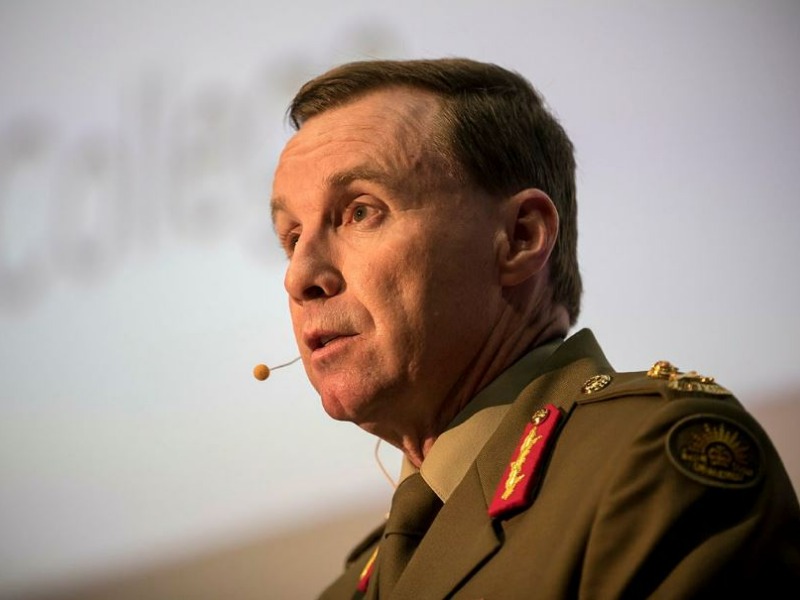
Major-General Mick Ryan spent 35 years in the Australian Army. Since retiring from service, he was appointed the Lowy Institute inaugural senior fellow in military studies and has been a prolific author on defence and geostrategic issues.
Maj-Gen Ryan has been a frequent visitor to war zones and geopolitical hotspots from Ukraine to Taiwan to Israel and the middle east, producing a stream of work related to changes in military strategy.
The time he has spent in Ukraine has given him a front-row seat to the dramatic impact that new technologies have had on the battlefield, and a view of the fast-evolving innovation ecosystem that has developed these changes.
In this episode of the Commercial Disco, Maj-Gen Ryan offers some fascinating insights into the long-term changes in Ukraine that helped it to very quickly adapt and build a DefenceTech ecosystem that has underpinned its survival through this protracted war with Russia.
In this podcast, we discuss at length the thesis of Maj-Gen Ryan’s most recent book, ‘The War for Ukraine: Strategy and adaptation under fire’.
He says there are important lessons for Australia in Ukraine, if only Australia would make the effort to learn them.
The unfortunate reality is that the Australian defence bureaucracy has been “slovenly, to be quite frank, and quite arrogant in its approach to learning from Ukraine,” and generally unwilling to send people in to take advantage of Ukraine’s willingness to share.
“We’ve been very slow, we’ve been very backward, and frankly, not very innovative in our engagement with this learning and adaptation ecosystem,” Maj-Gen Ryan said.
“[That ecosystem] has developed in Ukraine over the last four and a half years, and is moving at a pace that civilian bureaucrats in this country cannot comprehend,” he said.
The development of that DefenceTech ecosystem was not spontaneous. The fact of Russia’s illegal full-scale invasion of Ukraine provided an existential accelerant, but the parts of the system had to already be in place for it to have been scaled-up so quickly and effectively.
This has involved civilian infrastructure and capability as much as military, Maj-Gen Ryan says.
After Russia’s forced takeover in 2014 of the Donbas and Crimean peninsula, Ukraine had been shocked into a rethink of how they fought, how they organised as a society and how they supported military operations.
In the intervening years before the 2022 full-scale invasion, there has been ongoing fighting – sometimes high-tempo, sometimes low-tempo – but it forced Ukraine into rethinking their innovation, their learning and their adaptation culture.
The country had also focused during those years – as a lot of European companies had – in investing heavily in the digital transformation of government and its broader economy.
“The really big payoff was the technical literacy of the workforce … they have got a very tech-literate civilian workforce that was able to put its hand up in 2022 and say, ‘I can do this with drones, I can do this with digital command and control, I can do this with a range of things,” Maj-Gen Ryan said.
“So, you have a Ukrainian society that’s overall very well educated, very tech literate, and very forward leaning from the grassroots to helping their soldiers,” he said. “I think the early battles, particularly the Battle for Kyiv, were won largely because of those grassroots efforts.”
“That’s where the first drones were used, that’s where you saw in places like Moschun – where I visited and spoke to the local people – an integration between military and civilians in defensive operations,” he said.
“It was the tech literacy and the grassroots efforts that we saw in 2022 that provided the foundations for what we’re seeing today.”
Do you know more? Contact James Riley via Email.