
Silex Systems will push ahead with plans to build a large-scale laser uranium enrichment facility in the United States despite losing out on a US$900 million government contract to expand reactor fuel production.
The ASX-listed local laser enrichment firm on Tuesday said it had missed out on the US Department of Energy (DoE) contract under the low-enriched uranium Request for Proposal.
French rival Orano Federal Services beat Silex to the deal to expand US low-enriched uranium capabilities, part of a US$2.7 billion investment designed to counter the dominance of Russian enriched uranium.
The company will instead receive US$28 million for further research and development through its subsidiary Global Laser Enrichment (GLE), which it jointly owns with Canadian Mining and Energy Corporation.
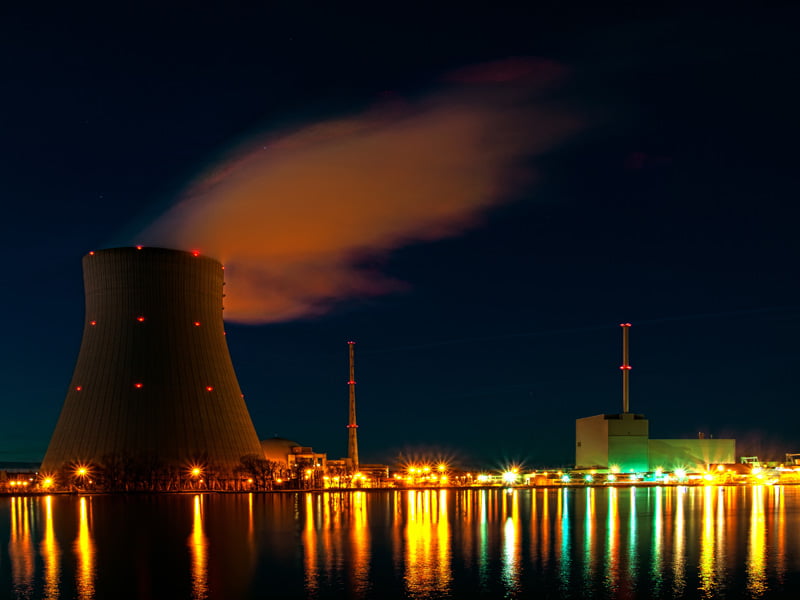
Russia controls around 44 per cent of the world’s enriched uranium capacity and is the only country that makes the high-assay low-enriched uranium (HALEU) used to fuel next-generation nuclear power reactors.
Silex’s share price fell as much as 35 per cent on the news, even as the company stresses that it remains on track to commercialise GLE and build its planned Paducah Laser Enrichment Facility in the US state of Kentucky.
“The significantly higher enrichment efficiency and throughput of the SILEX technology puts GLE in a very strong position relative to competitors using second generation centrifuge technology,” the announcement said.
After reporting it had been invited to compete for the DoE contract, the company underwent a $130 million fundraising round in August last year to commercialise GLE.
It followed the purchase of a 269-hectare site in Kentucky’s west in November 2024. In June 2025, the proposal for the enrichment facility was submitted to the US Nuclear Regulatory Commission.
GLE boss Stephen Long at the time acknowledged it could take up to 36 months for the plans to be approved, but last year reportedly said he hoped to have Paducah operational by 2030.
The finalised facility will exclusively re-enrich depleted uranium and is expected to produce up to five million pounds of uranium and up to 2,000 metric tonnes of conversion capacity annually for up to 30 years.
The DoE also announced contracts for HALEU service expansion with American Centrifuge Operating, and General Matters, a startup backed by controversial billionaire Peter Thiel.
Silex’s uranium enrichment technology was developed in the late 90s at the CSIRO’s Lucas Heights research facility by Australian scientists Michael Goldsworthy and Horst Struve. Mr Goldsworthy continues as Silex chief executive and managing director.
The Separation of Isotopes by Laser Excitation (SILEX) process uses calibrated infrared wavelengths vibrating at the same frequency as the uranium 235 molecules found in depleted uranium – or tails – to hasten the speed with which they can be separated and collected for reuse as reactor fuel.
The technology is considered faster, cleaner and more scalable than older centrifugal molecular separation techniques, which are prone to mechanical wear.
Silex Systems in 2024 signed a multi-million-dollar deal to use its laser techniques to manufacture high-grade silicon for Australian quantum computing developer Silicon Quantum Computing.
With Justin Hendry
Do you know more? Contact James Riley via Email.